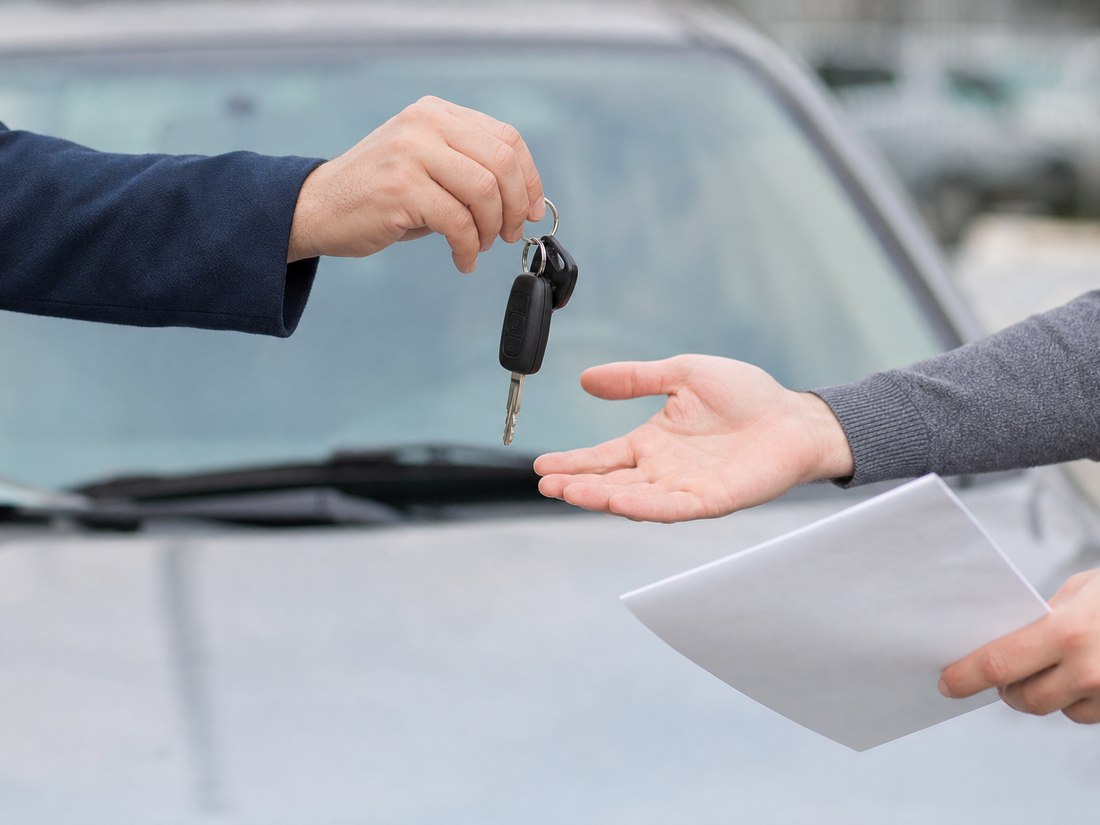
Get paid in a form nothing can fake at the curb
Two payment methods survive a stranger in a parking lot. Cash, counted inside a bank branch where a teller can run it through a counter - not in the driveway, where one stack of twenties looks like any other. And a cashier's check, but only once you've called the issuing bank yourself - using a number you look up independently, never the one printed on the check - and had them confirm, out loud, that it was actually issued for that amount. Never take one at face value because the paper looks official.
The FTC explains why a check clearing your account proves nothing: "By law, banks have to make deposited funds available quickly. Even if you see the funds in your account, that doesn't mean it's a good check." A fake one can sit there looking spent for weeks before the bank catches it - by which point the buyer, and the car, are both gone.
Source: FTC, How To Spot, Avoid, and Report Fake Check Scams.
The buyer who sends too much, and the one who wants an "escrow" site
Two patterns cause most of what goes wrong. First, a buyer sends a check for more than your price and asks you to wire or gift-card back the difference - the FTC names it directly: "Overpayments. People buying something from you online, 'accidentally' send a check for too much, and ask you to refund the balance. But that's a scam." Second, a buyer skips paying you and points you at a third-party "escrow" or "buyer protection" site you've never heard of, which asks for a fee before it will "release" money you never see.
Both collapse under the FTC's rule for how scammers ask to be paid: "Never pay someone who insists that you can only pay with cryptocurrency, a wire transfer service like Western Union or MoneyGram, a payment app, or a gift card." Watch the feeling, not just the method: "Resist the pressure to act immediately. Honest businesses will give you time to make a decision. Anyone who pressures you to pay or give them your personal information is a scammer."
Sources: FTC, How To Spot, Avoid, and Report Fake Check Scams and How To Avoid a Scam.
A test drive is a risk you're still carrying
Refusing a test drive to a serious buyer is its own red flag, so let them drive it - but go along, and photograph the buyer's license before the keys leave your hand. A genuine buyer won't refuse either request. Keep the signed title, or Form 718 if the record is electronic, in your own hands until you've actually been paid - a buyer who leaves with both the keys and a completed, notarized document, and nothing paid, has everything needed to walk off with a dispute you'd have to prove afterward. Payment, paperwork and keys move together, in that order, not before.
Where to meet a stranger for this
Tulsa's police department doesn't publish a marked, monitored lot for online sales the way some departments do - nothing of the kind is on the city's police or public-safety pages as of this check. Absent that, the ordinary precautions hold: a public place with other people and cameras around, done in daylight, with someone who knows where you'll be. If anything about the meeting feels off, 311 is Tulsa's published number for anything short of an emergency in progress.
Checked against: City of Tulsa, Police and Public Safety.
Never sign with the buyer's name blank
On Form 718, Oklahoma's bill of sale for an electronic record, the buyer's name sits on the same page as the seller's notarized, sworn statement - so leaving it blank leaves the whole document unfinished. A paper certificate carries its own assignment section, and Service Oklahoma's own description of what a licensed operator will accept is "a properly assigned and notarized Oklahoma certificate of title."
A page signed with the buyer's name, address or price still blank can be finished by whoever ends up holding it afterward, and it defeats the reason a notary is there at all - watching you complete one finished statement, not witnessing a signature on a form nobody has finished. Fill in the buyer's name, address and price first. Sign last.
Source: Service Oklahoma, Vehicle Titles.
Keep copies, then file the paperwork yourself
Before the buyer drives off, photograph the completed, notarized document - both sides on a paper title - plus the buyer's license and whatever proof of payment you have. Then use that information for the one thing that actually ends your exposure: filing the pre-registration. Service Oklahoma is specific about who can do it: "the buyer and the private seller decide who submits the pre-registration information on the Navigate website. The submission must be completed within two business days from the date of sale."
File it yourself and you never have to wonder whether the buyer got around to it - filing yourself means "the buyer will receive an email asking them to confirm the info." A few minutes at navigate.ok.gov puts the sale on record with the state instead of resting on anyone's word.
Source: Service Oklahoma's help center, If I'm a private seller, what do I need to do?.
The honest alternative: skip the private buyer
Everything above exists because a private sale hands the risk to whoever cares more about getting it right - you. An instant offer removes that part: no stranger to vet, no check to verify, no meeting spot to pick. The process starts with a free, no-obligation cash offer online, and once accepted, "the buyer arranges and covers the cost of pickup at a time that's convenient for you." At pickup, "payment is issued immediately by check" - and what you bring is the same three things a careful private buyer would ask for: your title, or Form 718 if the car's Oklahoma record is electronic; your registration; and a valid driver's license or ID.
Source: the buyer, Sell My Car.
Asked by Tulsa sellers
Is a cashier's check safe to accept from a stranger?
Only once verified - call the bank printed on the check, using a number you look up yourself, and confirm it was issued for that amount before handing over the car.
A buyer offered to send more than my asking price. Good sign?
The opposite. The FTC names this exact pattern - a check for too much, then a request to refund the difference - as a scam.
Does Tulsa have a police-monitored spot for meeting online buyers?
Not one the city's own pages list. Meet somewhere public with people and cameras around, in daylight, and tell someone else where you'll be.
Can I let a buyer test drive before I've been paid?
Carefully - go along and photograph the license first. Keep the signed title in your own hands until you've actually been paid, so nobody leaves with both the keys and a finished document before the money does.
What if the buyer wants to handle the pre-registration?
Oklahoma leaves that choice to the two of you, but filing it yourself at navigate.ok.gov inside the two-business-day window ends the question rather than trusting them to.
Is there a way around all of this?
Yes - a free, no-obligation instant offer online skips the stranger entirely. No check to verify yourself: the buyer arranges and covers the cost of pickup, then issues payment immediately by check once the car is collected.
Rather ask a person first?
Call the Tulsa line, (539) 271-2021. Ask about a check you're unsure of, a buyer who's pushing too hard, or anything else above. Then get the offer when you're ready to skip the risk entirely.
More on selling a car in Tulsa
- PaperworkWhat you sign, who notarizes it, the two-day deadline, and which counter in Tulsa takes it.
- No clean titleLost the title, a lien still on record, the owner has died, or the title is from another state.
- Towed or impoundedWhere Tulsa takes a towed car, what it costs to get out, and when it is worth letting go.
- Tolls & PikePassPikePass, PlatePay, and why turnpike bills keep arriving for a car you already sold.
- InsuranceOklahoma's minimum coverage, what a lapse costs, and the letter about a car that is gone.
- RegistrationRenewing here: what it costs, where to go, and why Tulsa County tests nothing.